Mastering Rabbit Outline Art Vectors for Modern Design Projects
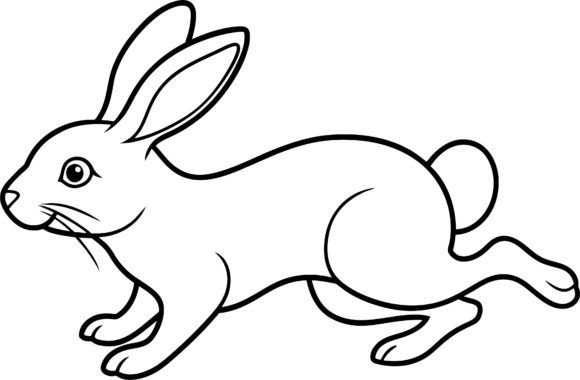
When a designer opens their software to create spring-themed marketing materials, children’s book illustrations, or whimsical branding, the rabbit is often the first motif that comes to mind. However, not all bunny graphics are created equal. The specific choice of a Rabbit Outline Art Vector distinguishes professional work from amateur clip-art collages. Unlike raster images that pixelate when resized, vector outlines offer infinite scalability and editability, making them an indispensable asset in contemporary graphic design workflows.
The appeal of outline art lies in its deceptive simplicity. A single continuous line can convey softness, motion, and personality without the visual weight of solid fills or complex shading. For designers working across multiple mediums—from tiny mobile app icons to massive vinyl wall decals—this versatility is paramount. Understanding how to select, customize, and implement these vectors effectively can significantly streamline production time while elevating the aesthetic quality of the final output.
The Technical Advantage of Vector Outlines Over Raster Images
To appreciate the value of a Rabbit Outline Art Vector, one must understand the fundamental difference between vector and raster graphics. Raster images, such as JPEGs or PNGs, are composed of a fixed grid of pixels. When you enlarge a rasterized drawing of a rabbit, the edges become jagged and blurry. This limitation forces designers to source multiple file sizes or risk poor print quality.
Vectors, conversely, are defined by mathematical paths. An outline of a rabbit in SVG, AI, or EPS format contains no pixel data; it contains coordinates and curves. This means the artwork remains crisp whether it is printed on a business card or wrapped around a vehicle. Beyond resolution independence, vectors offer superior workflow efficiency:
- Editable Stroke Properties: You can adjust the thickness of the rabbit’s outline instantly without redrawing the shape.
- Color Flexibility: Changing a black outline to gold foil or neon pink takes seconds via the color picker.
- Node Manipulation: Designers can reshape ears, adjust the curve of the back, or modify facial expressions using anchor points.
- Small File Sizes: Simple outline vectors typically have much smaller file footprints than high-resolution photos, improving web performance.
Selecting the Right Line Weight and Style
Not every project requires the same type of line. The emotional resonance of a Rabbit Outline Art Vector depends heavily on stroke weight and style consistency. Before downloading or purchasing assets, consider the intended application and audience.
Monoline vs. Variable Width
Monoline vectors maintain a consistent stroke width throughout the entire drawing. This style feels modern, clean, and minimalist. It is ideal for technical diagrams, logo marks, and contemporary packaging where uniformity suggests precision. Variable width lines, which mimic the pressure sensitivity of a brush or pen, feel more organic and hand-drawn. These are better suited for storybook illustrations, nursery decor, and artisanal branding where warmth and human touch are priorities.
Complexity and Detail Level
Highly detailed outline vectors with fur texture and intricate patterns serve well as standalone hero images but can become muddy at small sizes. Conversely, simplified silhouettes with minimal internal lines work beautifully as repeating patterns, watermarks, or iconography. Matching the detail level to the viewing distance ensures the rabbit remains recognizable and aesthetically pleasing in context.
Customization Strategies for Unique Brand Identity
Using stock vectors does not mean sacrificing originality. Professional designers treat a Rabbit Outline Art Vector as a starting foundation rather than a finished product. Customization transforms generic assets into proprietary brand elements.
- Combine Multiple Elements: Merge a rabbit outline with floral vectors, geometric shapes, or typography to create a composite lockup unique to your project.
- Adjust Proportions: Exaggerate features like ear length or eye size to match a specific character design or brand mascot guidelines.
- Apply Textures: Use clipping masks to apply grain, watercolor washes, or halftone patterns within the outline boundaries for added depth.
- Create Variations: Develop a family of poses (sitting, jumping, sleeping) based on the same base vector to ensure visual consistency across a campaign.
This approach maximizes return on investment. Instead of commissioning custom illustration from scratch, designers leverage existing high-quality vectors and invest their time in refinement and integration.
Industry Applications and Practical Use Cases
The utility of rabbit outline artwork extends far beyond Easter promotions. Various industries rely on these versatile graphics year-round for functional and decorative purposes.
Children’s Products and Education
In educational materials and kids' apparel, clarity is king. Bold, friendly Rabbit Outline Art Vector designs communicate safety and approachability. Coloring books specifically require clean, closed-path vectors that print sharply on uncoated paper. Designers must ensure there are no stray nodes or open paths that could confuse automated cutting machines or printing processes.
Sustainable and Organic Branding
Rabbits symbolize nature, gentleness, and sustainability. Skincare brands, organic food companies, and eco-friendly textile makers frequently use delicate line-art rabbits to signal natural ingredients and ethical practices. In these contexts, thin, elegant strokes paired with earth-tone palettes reinforce brand values without overwhelming product photography.
Craft and Maker Communities
The rise of Cricut and Silhouette machines has exploded demand for cuttable vectors. Crafters need optimized Rabbit Outline Art Vector files with welded layers and no overlapping lines. Designers creating content for this market must prioritize machine readability over artistic complexity, ensuring smooth cuts on vinyl, cardstock, and fabric.
Licensing and Ethical Considerations
Technical suitability is only half the equation; legal compliance is equally critical. Misunderstanding licensing terms can lead to costly infringement claims. Always verify the specific license attached to any Rabbit Outline Art Vector before commercial use.
Personal Use Licenses typically prohibit selling products featuring the artwork. Commercial Licenses allow use in client projects and products for sale, but may limit the number of units or impressions. Extended Licenses are usually required for mass-market merchandise, templates for resale, or NFT creation. Additionally, check whether attribution is required. Some creators mandate credit in exchange for free usage, while premium assets often waive this requirement.
Beyond legality, consider cultural sensitivity. Rabbits hold different symbolic meanings across cultures. While generally positive in Western contexts, ensure the depiction aligns with the target audience’s cultural framework, especially for international campaigns.
Optimizing Vectors for Digital and Print Production
A beautiful vector can still fail if improperly prepared for output. Different platforms demand different optimizations.
For web and digital use, export as SVG. Clean the code by removing unnecessary metadata, grouping logical elements, and simplifying paths. This reduces load times and improves accessibility when proper alt text and titles are added. For responsive design, use relative units rather than fixed pixel dimensions.
For print production, convert all text to outlines and expand strokes if the printer requests it. Ensure color modes match the output device: CMYK for offset printing, RGB for digital displays, and Pantone spot colors for specialized finishes like foil stamping. Always request a physical proof when using intricate outline vectors on textured substrates, as ink spread can alter perceived line weight.
Integrating Outline Art Into Cohesive Design Systems
Successful design isn't about isolated pretty pictures; it's about systematic visual communication. A Rabbit Outline Art Vector should exist within a broader design system that includes typography, color palettes, and supporting graphical elements.
Establish guidelines for how the rabbit appears across touchpoints. Define minimum clear space around the artwork, approved color combinations, and prohibited modifications. Document these rules in a brand guide to prevent inconsistent application by team members or external vendors. When outline art is treated as a systematic component rather than ad-hoc decoration, it builds stronger brand recognition and trust over time.
Ultimately, the power of rabbit outline vectors lies in their adaptability. They bridge the gap between playful and professional, simple and sophisticated, digital and tactile. By understanding their technical properties, selecting appropriate styles, customizing thoughtfully, and preparing meticulously for production, designers unlock the full potential of this enduring motif. The result is work that feels both timeless and perfectly suited to its contemporary context.